The consistency of the texture of dishwasher capsules has a significant impact on their cleaning effect, solubility and user experience. The following is an analysis from different dimensions:
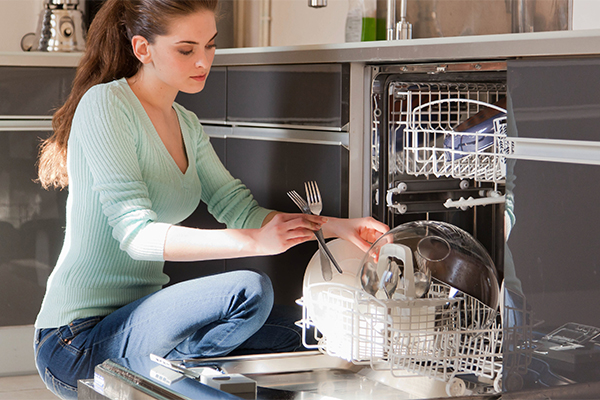
First, the influence of texture consistency on cleaning effect
Distribution and release of active ingredients
Capsules with higher viscosity usually contain more solid or semi-solid active ingredients (such as enzyme preparations, bleaching agents), which need to be gradually dissolved during the washing process. If the texture is too thick, it may lead to uneven release of components and insufficient cleaning effect in some areas. However, if the texture is too thin, the active ingredients may disperse too quickly in water and fail to fully contact the surface of the tableware.
Capsules of moderate thickness can ensure that the enzyme preparation quickly releases and breaks down oil stains at the beginning of washing, and then slowly releases the bleach to remove stubborn stains later.
Foam generation and decontamination ability
Surfactants are the key components for generating foam in detergents, and their concentration is directly related to the consistency of the texture. Capsules with higher viscosity may contain a higher proportion of surfactants, thereby generating richer foam and enhancing the decontamination ability. However, if the texture is too thick, the foam may be overly viscous, affecting the scouring effect of the water flow on the tableware.
Analogy: Moderately thick detergent foam is similar to “fine cream”, which can cover the surface of tableware without hindering water flow.
Second, the influence of texture consistency on solubility
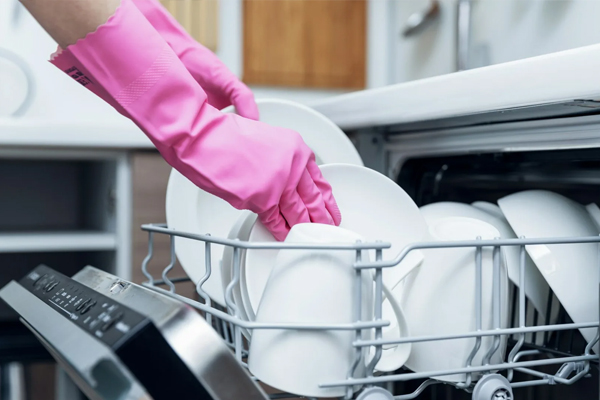
The solubility matching property of water-soluble membranes
The outer water-soluble film of the dishwasher capsule needs to match the consistency of the inner texture. If the internal texture is too thick, after the membrane dissolves, the diffusion may be slow due to the viscosity of the liquid. However, if the texture is too thin, the liquid may be lost rapidly after the film dissolves, failing to fully cover the tableware.
Technical points: The consistency of the high-quality capsules should be designed in coordination with the dissolution speed of the water-soluble film to ensure that they are dissolved and evenly dispersed within 5 to 10 minutes after the dishwasher starts.
The relationship between temperature and dissolution efficiency
The water temperature of a dishwasher is usually 60-80℃. Capsules with a higher consistency may dissolve faster at high temperatures, but if the texture is too thick, high temperatures may cause some components (such as enzyme preparations) to become inactive. Capsules that are too thin in texture may dissolve insufficiently at low temperatures, affecting the cleaning effect.
Experimental data: Research shows that capsules with moderate consistency have the highest dissolution efficiency at a water temperature of 70℃, and the retention rate of active ingredients can reach over 95%.
Third, the impact of texture consistency on user experience
Convenience of deployment and residual risks
Capsules of moderate consistency are easier to put in and less likely to remain inside the dishwasher. If the texture is too thick, the capsules may remain at the dispensing port or in the pipeline due to their stickiness. However, if the texture is too thin, the liquid may leak during transportation or storage.
User feedback: Most users prefer capsules with a texture between “honey” and “milk”, which are convenient to distribute and have no risk of residue.
Smell and sensory experience
Capsules with a higher consistency may produce a stronger odor due to the high concentration of their ingredients, and some users may be sensitive to this. Capsules that are too thin in texture have a milder smell, but they may make users doubt their cleaning ability.
Design optimization: High-quality capsules balance the scent and cleaning effect by adding natural fragrances or adjusting the proportion of ingredients, enhancing the user experience.
Fourth, the reasonable range and optimization direction of texture consistency
Reference to industry standards
At present, there is no unified standard for texture consistency, but most manufacturers keep the viscosity of capsules within the range of 1000-5000 mPa·s (similar to the viscosity of honey and syrup) to ensure a balance between solubility and cleaning effect.
Future optimization direction
Layered design: Through the multi-layer structure inside the capsule, components of different thicknesses are encapsulated in layers to achieve phased release.
Intelligent adaptation: Develop capsules that can automatically adjust their consistency based on water quality and the degree of stains to enhance cleaning efficiency.
Environmentally friendly materials: Biodegradable viscosity regulators are used to reduce the impact on the environment.

u3uhyw