
The method of using dishwasher capsules to deal with rice stains on tableware needs to be combined with the component characteristics of the rice stains, the chemical effect of the cleaning agent, and the physical flushing principle of the dishwasher. The following is an analysis from three aspects: cleaning mechanism, technical optimization, and usage skills:
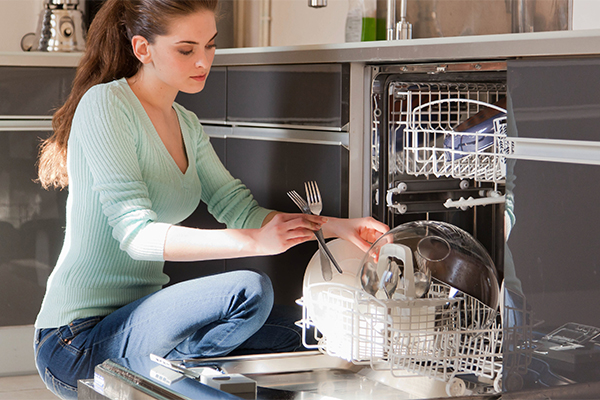
First, the composition characteristics and cleaning difficulties of rice stains
The main ingredients of rice stains
Rice pickles are mainly composed of starch, protein, oil and a small amount of sugar. Among them, starch will gelatinize to form a sticky substance at high temperatures, proteins will denature and coagulate when exposed to heat, and oils are prone to adhere to the surface of tableware. These components work together, making it difficult to remove rice stains simply by flushing with water.
Cleaning difficulties
Starch gelatinization: During the cooking process of rice, starch absorbs water and expands, forming a sticky colloid. After drying, it adheres tightly to the surface of tableware.
Protein denaturation: Proteins in food coagulate at high temperatures, forming hard residues.
Grease adsorption: Grease combines with the hydrophobicity of the tableware surface to form a stubborn oil film.
Second, the cleaning mechanism and optimization of dishwasher capsules
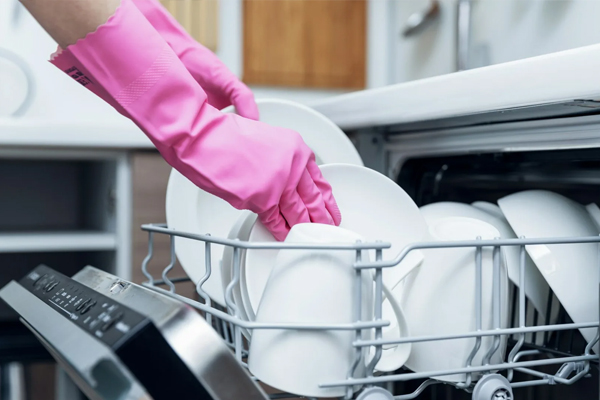
The decomposition effect of enzyme preparations
Amylase: For starchy rice stains, amylase can rapidly break down gelatinized starch in warm water at 40-60℃, converting it into soluble sugars, which is convenient for water flow to wash away.
Protease: For protein residues, protease can break down denatured proteins, making them loose and detach from the surface of tableware.
Lipase: For oily rice stains, lipase can break down triglycerides, generating fatty acids and glycerol, and reducing the viscosity of the oil.
The emulsification and penetration effects of surfactants
Emulsification: Surfactants can encapsulate oils into tiny particles, keeping them suspended in water and preventing them from re-adhering to tableware.
Penetration: Surfactants can reduce the surface tension of water, penetrate into the gaps between rice stains and tableware, soften and peel off residues.
Saponification and dissolution of alkaline components
Saponification reaction: Alkaline components (such as sodium carbonate and sodium hydroxide) can undergo saponification reactions with oils and fats, generating soluble soap and glycerol, which further removes oil stains.
Dissolution: An alkaline environment can soften protein and starch residues, making them more easily washed away by water flow.
Third, the technical optimization direction of dishwasher capsules
Release the technology in stages
Initial release: During the initial stage of washing, the capsules rapidly release surfactants and alkaline components, softening and peeling off rice stains.
Mid-stage release: During the mid-stage of washing, amylase and protease are released to break down the remaining starch and protein.
Later release: In the later stage of washing, lipase and bleach are released to remove stubborn grease and pigment residues.
Temperature adaptability design
Low-temperature enzyme preparations: For low-temperature washing procedures (such as below 50℃), low-temperature-resistant enzyme preparations are added to the capsules to ensure that rice stains can still be effectively decomposed at low temperatures.
High-temperature stability: For high-temperature washing procedures (such as above 70℃), heat stabilizers are added to the capsules to prevent enzyme preparations from being inactivated at high temperatures.
Multilayer structure packaging
Outer fast-dissolving film: It dissolves rapidly upon contact with water, releasing surfactants and alkaline components to quickly soften rice stains.
Inner slow-release membrane: Slowly releases enzyme preparations and bleach to ensure continuous effectiveness throughout the washing cycle.
Fourth, usage skills and precautions
Pre-treatment suggestions
Scrape off large residues: Before putting the capsules into the tableware, use a scraper or paper towel to scrape off large grains of rice and vegetable scraps to reduce the cleaning burden on the capsules.
Soaking and softening: For particularly stubborn rice stains, you can soak the tableware in warm water for 10 to 15 minutes before washing the dishes to soften the residue.
Dishwasher program selection
High-temperature powerful program: For tableware with heavy oil stains or a lot of rice stains, select a high-temperature (above 70℃) and long-duration (more than 2 hours) washing program to fully leverage the cleaning power of the capsules.
Pre-wash function: By enabling the pre-wash function, some surfactants are released in advance to soften the rice stains.
Optimization of tableware placement
Avoid overlapping: Ensure there are sufficient gaps between tableware to prevent rice stains from being blocked or water from flowing through.
Upside down placement: Place the bowls and plates upside down so that the side with the rice stains is facing down, making it easier for water to directly rinse them away.
Fifth, evaluation and improvement of cleaning effects
Effect evaluation method
Visual inspection: After cleaning, observe whether the surface of the tableware is smooth without any residue and whether the rice stains have been completely removed.
Hand feel test: Touch the surface of the tableware with your hand to check if there is any sticky feeling or residual oil film.
Improvement direction
Ingredient adjustment: Adjust the proportion of enzyme preparations, surfactants and alkaline components in the capsules based on the actual cleaning effect.
User feedback collection: Through user surveys or online evaluations, collect feedback on the cleaning effect of rice stains and optimize the product in a targeted manner.
Sixth, Common Problems and Solutions
Reasons for the residue of rice stains
Insufficient capsule dosage: Increase the capsule dosage appropriately based on the number of tableware and the degree of stains.
Low water temperature: Check the water temperature setting of the dishwasher to ensure it is within the recommended suitable temperature range for the capsules.
Insufficient washing time: Extend the washing time or choose a stronger washing program.
Solution
Secondary cleaning: For particularly stubborn rice stains, the secondary cleaning function can be enabled or manual pre-treatment can be done.
Regular maintenance: Regularly clean the dishwasher’s spray arm and filter to prevent insufficient water flow due to blockage.
